Products · 06
Heat sinks
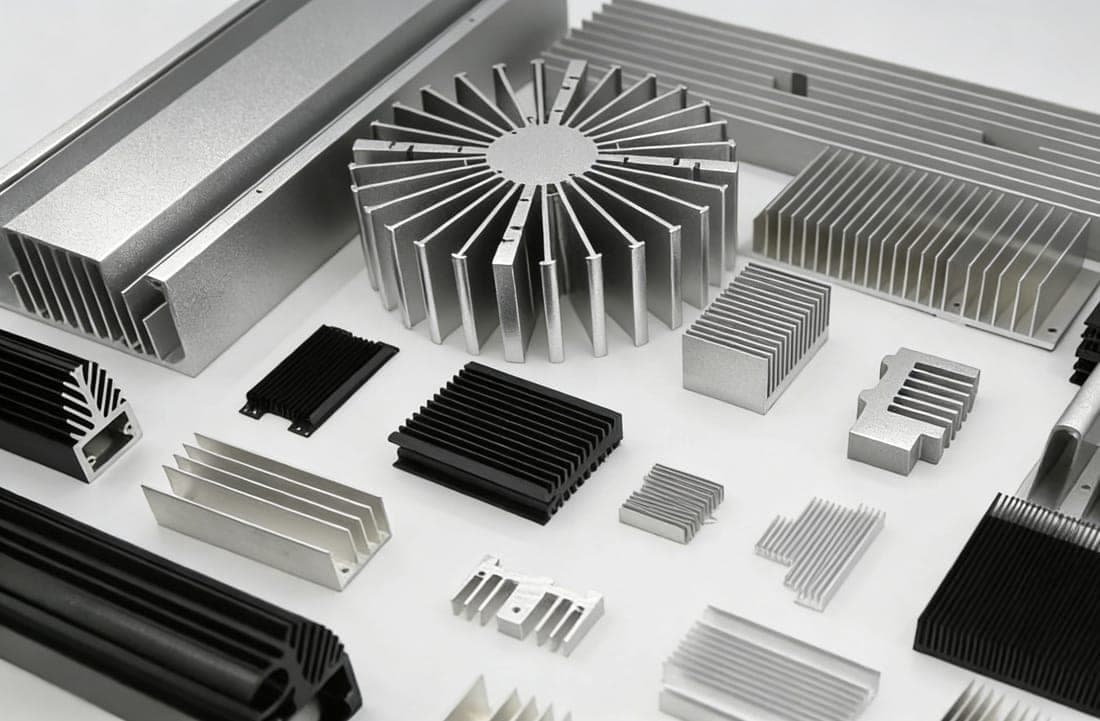
Extruded heat sinks with the mounting face machined flat — from drives and power supplies to dense AI hardware.
01Have these ready
Six things that turn a slow quote into a fast one.
02Where it's used
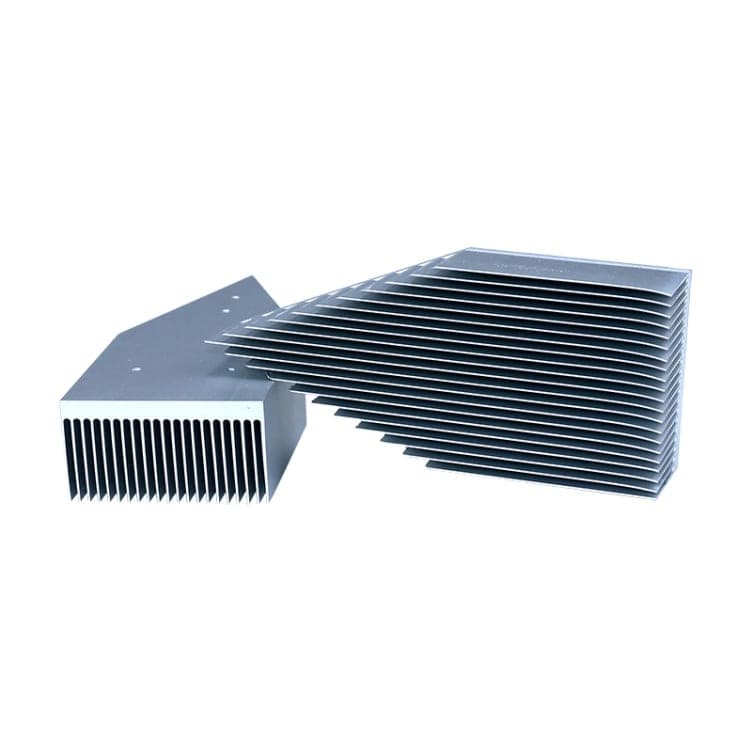
Power electronics
Sinks for inverters, drives and PSUs, machined for the device footprint.
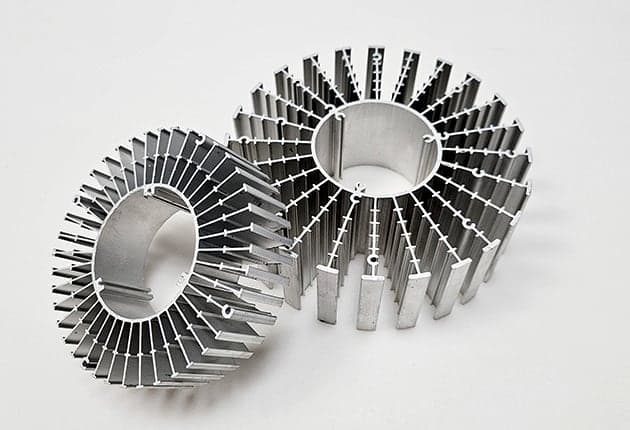
LED thermal management
Housing-and-sink sections for high-output LED modules.
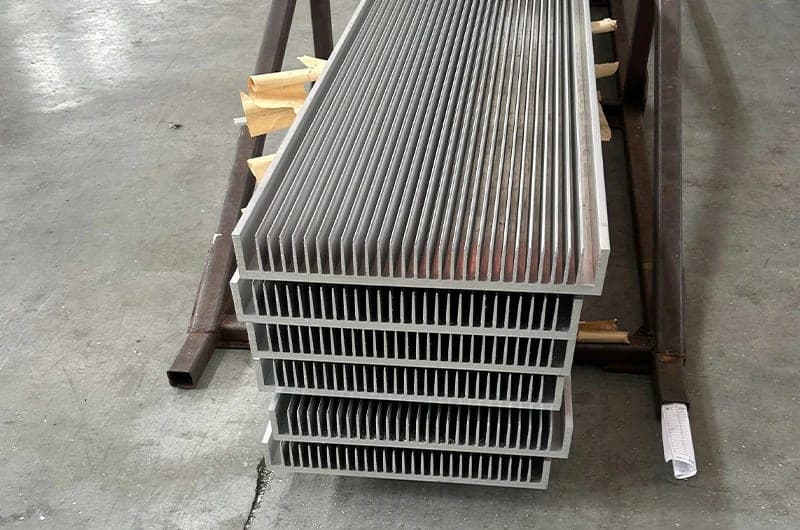
Machined-to-mount sinks
Faced, drilled and tapped to your mounting drawing, ready to bolt on.
APPLICATION FOCUS
AI server & data-centre cooling
In a dense AI rack the heat sink stops being a commodity and becomes part of the device design: the extrusion route, fin form and machined interface get decided as one package, early.
An extruded sink wins when the fin section repeats along the length and volume matters. Once the fins get taller and tighter than extrusion aspect ratios allow, skived or bonded fins — or a CNC-milled cold plate — take over. Send the section and the duty; we will tell you which route fits, and we machine the mounting interface on either one.
03Specifications
| Parameter | Working range |
|---|---|
| Alloy grades | 6063 / 6061 |
| Temper | T5 / T6 |
| Fin geometry | to your drawing |
| Base / fin thickness | from 0.7 mm (0.3 mm on small sections →) |
| Machining | Cut, drill, tap, flatness |
| Dimensional tolerance | to EN 12020 / ±0.1 mm |
| Surface finish | Mill / Black anodized |
04Three confirmations before production
Can we make it?
Fin geometry and base are read against press range and aspect-ratio limits — with an alternative route flagged if extrusion is the wrong tool.
Machining & finish agreed
Cut lengths, hole patterns, mounting-face flatness and mill or black anodize go into the quote.
Proof before shipping
Dimensions and flatness are measured, with material or finish certificates on request.
Machining and surface treatment happen here, in the same plant — CNC & machining · Finishing.
05Quality & certification
ISO 9001:2015 / GB/T 19001-2016
Quality Management System
- Certified scope
- Machining and Surface Treatment of Aluminum Products (Anodizing)
- Certificate no.
- 21826Q00612R101
- Valid until
- 28 Jun 2029
ISO 14001:2015 / GB/T 24001-2016
Environmental Management System
- Certified scope
- Machining and Surface Treatment of Aluminum Products (Anodizing) and related environmental management activities
- Certificate no.
- 21826E00416R101
- Valid until
- 28 Jun 2029
Issued by Shanghai Sailway Certification Co., Ltd. — accredited under CNAS / IAF MLA.
These certificates are held by our manufacturing plant.
Full stamped certificates are available on request. Numbers can be verified with the issuer or through CNAS.
06Frequently asked questions
Our sink has tall, dense fins. Is that extrudable?
Sometimes — the die's aspect ratio draws the line, and your section sits on one side of it or the other. Send it over: the answer comes back either 'yes, as drawn', 'yes, with this small change', or 'this wants a skived fin or cold plate instead'.
Is black anodize worth it thermally?
It raises surface emissivity, which helps the radiant share of heat transfer, and it protects and unifies the surface. How much that moves your numbers depends on the duty — describe it and you get a straight answer, not a sales one.
Flat mounting face, holes and threads — included?
Yes. Facing for flatness, drilling and tapping are machine-shop work, and the machine shop is here. Put the flatness call-out and hole pattern on the drawing and the sink arrives ready to bolt down.
Which alloy do heat sinks run in?
6063 is the workhorse — high thermal conductivity and friendly on the press. 6061 steps in when the part also carries structural load. The section and the duty decide; send both.